
Wholesale Price Trends
The New Zealand electricity market enters 2026 in a state of transition. Wholesale prices, which spiked dramatically during the dry hydro years of 2022–2024, have stabilised but remain elevated compared to historical averages. The Electricity Authority's latest market monitoring report shows average wholesale prices of $95–$120 per MWh, compared to the long-run average of $70–$85 per MWh. For commercial consumers, this translates to continued upward pressure on retail rates.
Grid Infrastructure Investment
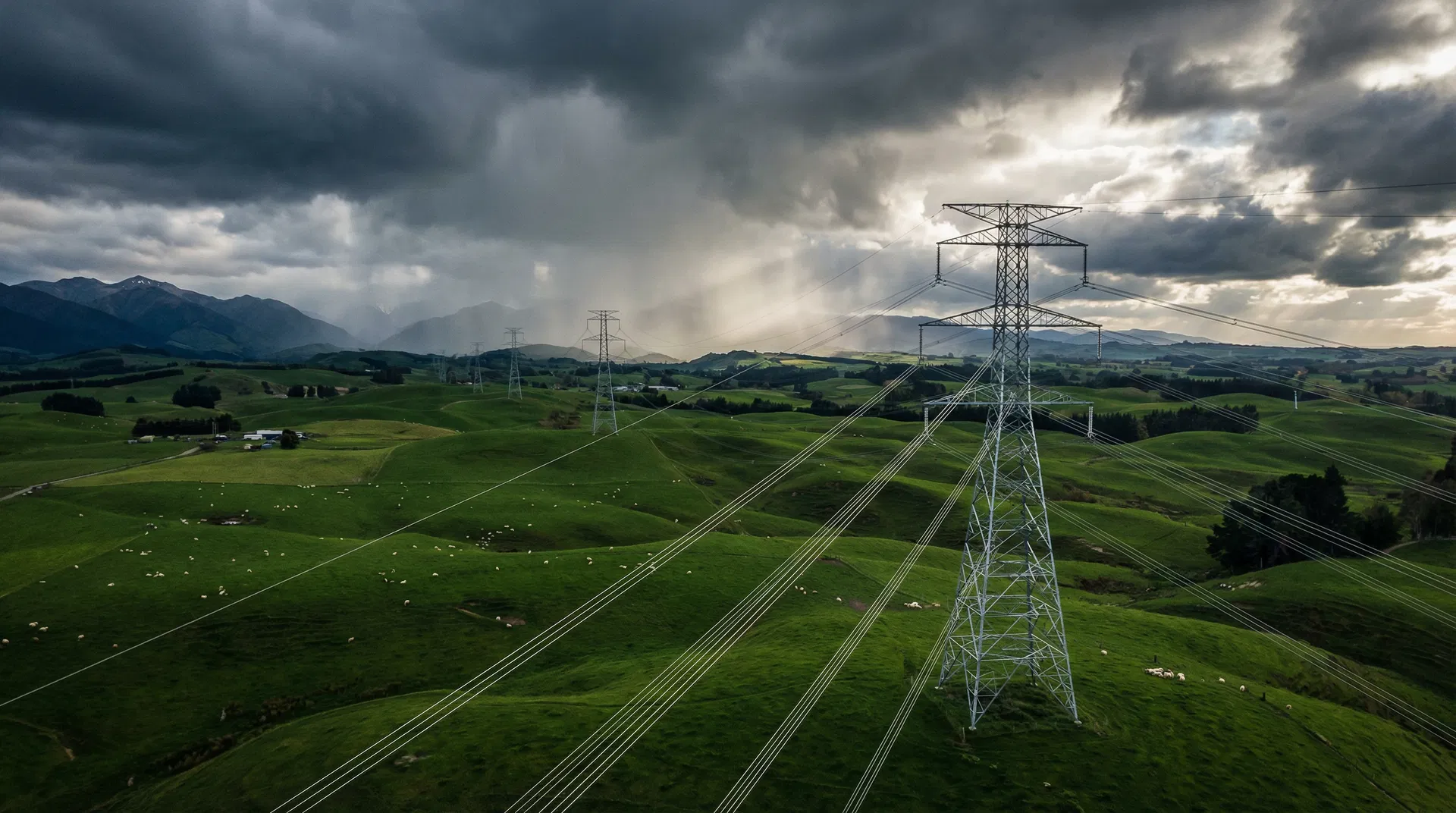
Transpower's Transmission Planning Report outlines $3.2 billion in grid investment over the next decade, focused on strengthening the backbone of New Zealand's electricity network. Key projects include the second Waikato–Auckland transmission line, upgrades to the Cook Strait HVDC link, and reinforcement of distribution networks in high-growth areas. While these investments will improve long-term reliability, they will also contribute to rising lines charges—a cost that is passed directly through to consumers.
The Rise of Distributed Energy
Perhaps the most significant trend shaping New Zealand's energy future is the rapid growth of distributed energy resources (DER). Solar PV installations are growing at 35% annually, with commercial installations now representing the fastest-growing segment. Battery storage deployments have tripled since 2024, driven by falling technology costs and improving economics. This shift towards distributed generation and storage is fundamentally changing the relationship between businesses and the grid.
Regulatory Changes Ahead
The Electricity Authority is actively developing new market frameworks to accommodate the growth of DER. Proposed changes include reforms to distribution pricing that better reflect the true cost of peak demand, new rules enabling battery storage systems to participate in ancillary services markets, and updated standards for grid-connected storage systems. For businesses investing in battery storage today, these regulatory changes represent an opportunity: systems installed now will be positioned to capture additional revenue streams as new market mechanisms come online.
What This Means for Your Business
For commercial and industrial energy consumers, the message is clear: electricity costs are unlikely to decrease meaningfully in the medium term, and the businesses that take control of their energy profile will have a significant competitive advantage. Battery storage is the most versatile tool available—it reduces peak demand charges today, enables solar self-consumption, provides backup power, and positions your business to participate in emerging grid services markets. The question is no longer whether to invest in energy storage, but when.